Weather and Climate in a Snap! [1]
Weather and Climate in a Snap!
by Emily Horton
NC Government & Heritage Library [2], 2012.
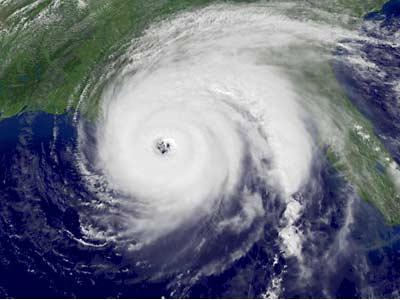 "Hurricane Ivan, 2004," Image courtesy of NCSU, Climate and Weather.North Carolina is located in the warm temperate zone. However, the difference in elevation across the state results in a variety of weather conditions throughout the three regions.
Average Rainfall Per Year: 44 inches
Average Snowfall Per Year: 5 inches
Lowest Temperature Recorded: -34°F on January 21,1985 in Mount Mitchell.
Highest Temperature Recorded: 110°F on August 21, 1983 in Fayetteville.
Regional Average Temperatures (°F)
Coastal Plain: Annual Average Temp: 66°F; January Average: lower 50's; August Average: mid 90's
Piedmont: Annual Average Temp: 60°F; January Average: upper 40's; August Average: mid-upper 90's
Mountains: Annual Average Temp: 55°F; January: lower 30's; August: mid-60's
Sources:
"North Carolina: Facts, Map, and State Symbol," Enchanted Learning, last modified 2010, http://www.enchantedlearning.com/usa/states/northcarolina/ [5] (accessed March 26, 2012).
"North Carolina Geography and Climate," Secretary of State/Kids Page," http://www.secretary.state.nc.us/kidspg/ [6](accessed March 26, 2012).
Image Credits:
"Hurricane Ivan, 2004," NCSU, Climate and Weather.
1 January 2012 | Horton, Emily S.