Free Suffrage [1]
Free Suffrage
by William S. Powell [2], 2006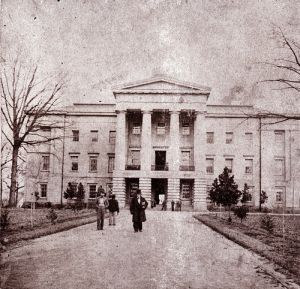 [3]
[3]
Free suffrage was a political concept heatedly discussed among North Carolinians in the mid-nineteenth century. The ownership of 50 acres of property or the payment of taxes had been a prerequisite for voting in certain instances since the colonial period [4]. In the gubernatorial campaign of 1848, however, candidate David S. Reid [5] accepted the proposal of leaders of his Democratic [6] Party that this limitation on the franchise be removed, making free suffrage a key issue in his campaign against Whig [7] candidate Charles Manly [8]. Although Manly won a narrow victory, free suffrage had become important to many North Carolinians. In the 1850 governor's race, Reid won handily over Manly and the Democrats captured control of the state legislature. A free suffrage constitutional amendment continued to be debated in the General Assembly [9] for several sessions until it finally became a reality in 1857 [10], when it won in a popular referendum by a wide majority of 50,007 to 19,397. Estimates from the era indicate that 125,000 North Carolinians gained the right to vote with the state's adoption of free suffrage.
References:
Lindley S. Butler, ed., The Papers of David Settle Reid (1993).
Paul D. Escott, Many Excellent People: Power and Privilege in North Carolina, 1850-1900 (1985).
Additional Resources:
1857 Session Laws, North Carolina Department of Cultural Resources Digital Collections: https://digital.ncdcr.gov/Documents/Detail/public-laws-of-the-state-of-north-carolina-passed-by-the-general-assembly-1856-1857/1952705?item=2020771 [10]
Image Credit:
Govenor David S. Reid, ca.1861, in front of State Capitol, was instrumental in the free suffrage movement. Image courtesy of the North Carolina State Archives; N-55-10-16. Available from https://www.flickr.com/photos/north-carolina-state-archives/2432212442/ [3] (accessed September 20, 2012).
1 January 2006 | Powell, William S.